
Published February 1, 2026
Raleigh Isn't One Market: Raleigh Isn’t One Market A Street-Level Guide to How Neighborhoods, New Construction, and Pricing Actually Move Differently

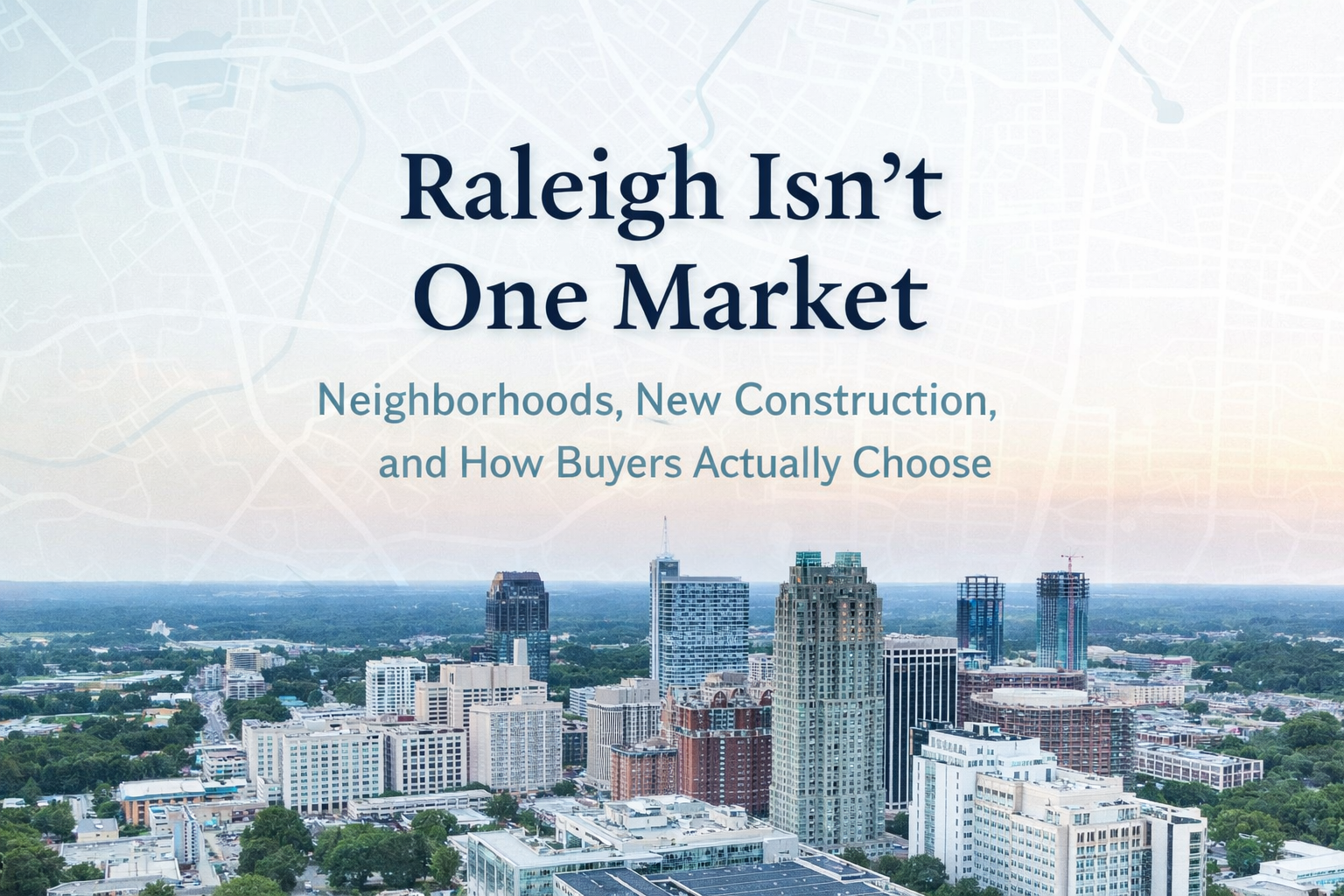
The Big Lie About Raleigh Real Estate
Most people talk about Raleigh like it’s one housing market.
It’s not.
Raleigh is a network of micro-markets that behave differently based on neighborhood culture, proximity to new construction, lifestyle fit, school zones, commute patterns, and even which side of a street you’re on.
That difference is the line between:
-
a home that sits
-
a home that sparks competition
-
and a listing that quietly underperforms while everyone wonders why
If you’re buying, selling, or building in Raleigh, understanding how these micro-markets move is more powerful than any citywide market report.
Why Averages Mislead Buyers, Sellers, and Builders
Citywide stats are useful for headlines. They’re not useful for decisions.
Here’s what averages don’t tell you:
-
One neighborhood can be drawing multiple offers while another two miles away is seeing price reductions
-
New construction can shift buyer behavior in surrounding resale markets almost overnight
-
Lifestyle factors, not price, often decide where buyers actually tour
When sellers price off the “last sale” instead of current buyer behavior in their pocket, they’re usually reacting to history, not reality.
How New Construction Changes the Entire Map
Builders don’t just add homes. They re-route buyer attention.
A new development can:
-
pull buyers away from nearby resale neighborhoods
-
raise expectations around layout, energy efficiency, and amenities
-
shift what price ranges feel “reasonable” in adjacent areas
This is why some resale homes start competing not with other resales, but with brand-new inventory down the road.
For sellers, this means your competition may not be your neighbor’s house.
For builders, it means your community is influencing pricing patterns beyond your boundaries.
The Street-Level Effect Most People Miss
Raleigh doesn’t move by zip code. It moves by street clusters.
Small factors can change how buyers feel instantly:
-
a quieter block vs a cut-through street
-
proximity to greenways or retail nodes
-
school boundary lines that don’t show on Zillow
-
where new development starts and stops
This is why two homes with similar stats can perform completely differently.
Understanding this “street-level effect” is what turns a listing from a guess into a strategy.
How Buyers Actually Choose Neighborhoods
Most buyers don’t start with price.
They start with:
-
commute tolerance
-
lifestyle fit
-
community feel
-
future flexibility
They narrow neighborhoods first. Then they choose a home.
That’s why neighborhoods that “feel right” often outperform purely affordable ones. Buyers will stretch for lifestyle before they stretch for square footage.
What This Means for Sellers
If you’re thinking about selling in Raleigh, your strategy should not be:
“What did my neighbor’s home sell for?”
It should be:
-
Which buyers are touring my area right now?
-
Are they comparing me to new construction or resale?
-
What features matter most in this micro-market?
When you price and position based on who is actually shopping your street, you change how your home enters the market.
What This Means for Builders and Developers
The strongest communities don’t just sell homes. They sell placement in a lifestyle map.
Buyers aren’t choosing between houses. They’re choosing between:
-
neighborhoods
-
commute patterns
-
social energy
-
future resale confidence
Developments that align their marketing with how buyers mentally rank neighborhoods tend to convert faster and hold pricing power longer.
The Neighborhood Authority Advantage
Most agents compete on:
-
how often they post
-
how many homes they list
-
how fast they respond
The ones who build long-term advantage compete on local authority.
When buyers and sellers see you as someone who understands how Raleigh actually moves, street by street, you become a resource, not a salesperson.
A Smarter Way to Navigate Raleigh
Whether you’re buying, selling, building, or relocating, the most valuable insight isn’t a market report. It’s understanding how your specific pocket of Raleigh behaves compared to the one next to it.
That’s where confident decisions come from.
If you want a street-level snapshot of what’s actually happening in your neighborhood or a community you’re considering, message “RALEIGH” and tell me the area you’re focused on. I’ll walk you through how buyers and sellers are really moving there right now.

Nicole Anglin
| Guided Path Realty at HomeSmart
or another way